
Constellation · Nevv Capital
Access As Alpha
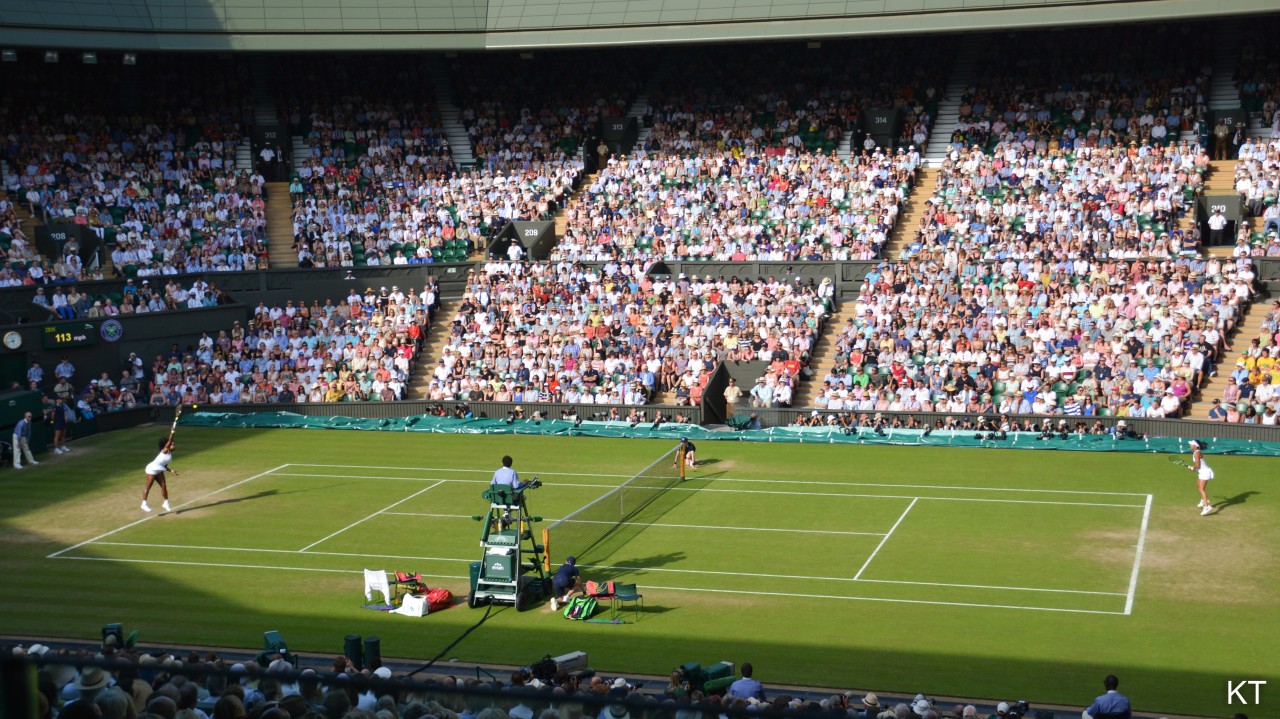
A century-old bond issued by a tennis club has tripled in two years. Its coupon is paid in afternoons on Centre Court, and its yield is measured in scarcity.
A Wimbledon debenture, the odd niche instrument that guarantees its holder a seat on Centre Court, as well as access to VIP lounges for five summers, has more than tripled in value since it was issued two years ago. We flagged this a year ago, when the same debentures, bought at £116,000 in April 2024, were already reselling for around £200,000, a 75% gain that read at the time like a charming analysis. This April the same 2026 to 2030 series sold for as much as £380,000, a price the All England Club publishes on its own official trading record, nearly double where it stood twelve months earlier.
The temptation with a story like this is to file it under luxury entertainment which would miss the interesting part, which is that a Wimbledon debenture is a financial instrument. It is issued, brokered, regulated and redeemed, and if you take it literally and follow its logic, it says something intriguing about where a certain kind of capital has decided to go. It also has a history worth telling properly, not least because most of the world reading about it has never queued outside a London tennis club and has no particular reason to know why this one, of all the tickets on earth, commands the premium it does.
The Oldest Crown In Sport
Start with the tournament itself, because the debenture is only ever worth what the fortnight behind it is worth, and the fortnight is a genuine outlier. The Championships is the oldest tennis event anywhere, first played in 1877, four years before the United States got round to staging one and twenty-eight before Australia did, and it remains the only one of the sport's four majors still played on grass, the surface tennis was actually invented for and the one every player privately finds the hardest, low, fast and unforgiving to anyone who has not spent a career learning to bend for it. Where the Australian, French and US Opens have spent the past few decades modernising toward hard courts, longer hours and sponsor branding wrapped around every net post, Wimbledon has spent the same decades mostly doing the opposite: insisting on all-white dress with strictness, allowing almost no advertising near its show courts beyond a discreet Rolex clock, and maintaining a Royal Box that still expects a bow or a curtsy when the monarch is present. The club gave up its sacred Middle Sunday rest day only once, in 2022, when a 145 years of tradition, thanks to advances in grass technology, stretching the Championships to a full fourteen days of play for the first time in its history.
In an attention economy built almost entirely on maximising reach, Wimbledon has built its brand on the opposite instinct, restraint and scarcity and the quiet implication that some assets are not for sale, with just enough pragmatism at the edges to keep the arithmetic working. And the debenture is only the most literal expression of it. The same discipline runs through the club's whole commercial operation, which is the part outsiders tend to get backwards. Wimbledon took in somewhere around £400 million of revenue last year, on the reporting of its filed accounts, a figure up more than 160% on a decade earlier and large enough, spread across a fortnight, to rank it among the highest revenue-per-day events in world sport. Analysts reckon just under half of that is media rights, with ticketing next and sponsorship a smaller slice still, and it is the sponsorship slice that reveals the philosophy.
There is no title sponsor, almost no advertising on Centre Court, and only seventeen official partners in total, a roster estimated to be worth in the region of £120 million a year between them, several tenured to a degree that has no real equivalent in modern sport: Slazenger has supplied the tournament's tennis balls since 1902, the longest unbroken sponsorship in sporting history, and Rolex has kept its time since 1978, its discreet crown on the Centre Court scoreboard one of the very few sponsor logos the club permits anywhere near the grass. Barclays is reported to pay about £20 million a year for the banking slot, the single largest deal, precisely because there are so few slots and none of them shout. The club is entirely candid about the strategy. Its commercial director has described a "clean court philosophy" at the heart of the brand, one whose objective, in his words, is not to maximise revenue in the short term but to build relationships for the long term. The prize fund tells the same story from the players' side, a record £64.2 million for 2026, up a fifth in a single year, the largest such rise the tournament has ever made.
A Croquet Club's Capital Markets Problem
The debenture is nearly as old as Centre Court itself, and its origin is a tidy lesson in why even the most storied institutions eventually need a term sheet. The All England Club began in 1868 as six gentlemen meeting at the offices of a magazine called The Field, drawn together by London's Victorian croquet craze; lawn tennis was added almost as an afterthought in 1875, granted a single spare lawn, and only took over the club's purpose entirely after Spencer Gore won the first Championship in 1877 in front of about two hundred spectators and pronounced, memorably and quite wrongly, that the sport would never rank among the great games. By 1919, with the tournament back after the First World War and Suzanne Lenglen's arrival drawing crowds the old Worple Road ground plainly could not hold, the club had arrived at a problem every growing enterprise eventually meets: a superb product and nowhere to seat the customers.
Its answer, in 1920, was to form a separate company, All England Lawn Tennis Ground Company, whose sole purpose was to buy thirteen and a half acres in Church Road and build a stadium on it, raising the money from tennis fans themselves: it issued debentures, bond-like certificates sold for cash, each granting its holder a Centre Court seat, and offered 2,000 of them at £50 apiece. The offer was oversubscribed and closed at £100,000.
And in a detail, the original instrument was a rather more conventional bond than the one on sale now: the "A" series paid 7.5% interest a year until 1947, on top of the right to buy a Centre Court seat. Somewhere across the renewals that followed, the club quietly retired the cash coupon and kept the seats, so the debenture as it exists today, income-free and seat-rich, is not the original design at all but what the original design evolved into once it became clear which half of the offer people actually wanted.
The stadium those first debentures paid for opened in 1922 and did not have an easy run. On the night of 11 October 1940, five German bombs struck the grounds, one of them tearing through the roof of Centre Court and leaving a crater where 1,200 seats had been, while the club itself spent the war requisitioned for a decontamination unit, the Home Guard and fire and ambulance crews. The bomb damage was patched up but not fully repaired until 1949, for want of money and materials under rationing. The debenture, meanwhile, simply carried on: when the original 1920 certificates reached the end of their life, the club reissued them in 1953 to the existing two thousand holders and added a hundred more, and that became the template it has followed ever since, a five-year renewal cycle with existing holders first in the queue, and a price that has done something remarkable across the decades. The Centre Court issue cost £23,150 for the series beginning in 2001. It reached £50,000 for 2016, £80,000 for 2021, and £116,000 for the run that began in 2024. On Dowgate's secondary market this spring, a single one changed hands for as much as £380,000. Laid out on one chart, a century of Wimbledon debentures looks less like the price history of a tennis ticket than the price history of scarcity itself, compounding quietly while nobody outside SW19 was paying attention.
It Really Is A Bond
Strip away the strawberries and, in its modern form, a debenture is a debt security issued by The All England Lawn Tennis Ground Company, the company that still owns the freehold under the world's most famous lawn. It is unsecured. It pays no interest. It is redeemable at par at the end of its five-year life, which is to say the club returns your nominal amount and the loan is closed. In the language of the tax code it is a Qualifying Corporate Bond, and we will come back to why that matters, because it matters more than it ought to. It is regulated by the Financial Conduct Authority and sold under a formal prospectus, brokered and approved by City firms exactly as a securities offering is handled. By design, the money it raises is ring-fenced for capital projects rather than mixed with the Championships' operating surplus, some ninety per cent of which flows onward to the Lawn Tennis Association to fund British tennis nationally under an agreement that runs to at least 2053. This is, underneath the grass, ordinary infrastructure finance, precisely as it was in 1920. The proceeds of the current cycle are earmarked for the club's latest expansion, thirty-nine new courts and an eight-thousand-seat stadium on the old golf course next door.
If that all sounds like a lawyer's distinction, the British government has just conceded the point. On 19 November 2025, the British government confirmed a long-promised ban on reselling tickets for profit, aimed at the touts and the resale platforms that had turned concert and match tickets into a grievance; henceforth, for most events, you may not resell a ticket for more than you paid for it. Wimbledon's debentures were granted one of only two narrow exemptions, the other being resales for charity. A debenture, the government accepted, is a transferable security with long-term value, regulated by the Financial Conduct Authority, and therefore a different kind of property from a ticket. So the law agrees it is not a ticket at all, and it is difficult to imagine a cleaner official endorsement of the thesis that this is a bond wearing a lanyard.
More on the Qualifying Corporate Bond structure and why it matters. Because a Wimbledon debenture is legally structured as a corporate bond, any profit you make when you eventually sell the debenture itself is generally free from UK capital gains tax. In effect, the appreciation in the value of the debenture can be realised tax-free, making it a particularly attractive long-term asset.
The annual tickets that accompany the debenture are treated separately. If you sell tickets for sessions you cannot attend, the tax treatment is different from that of the debenture itself and will depend on your individual circumstances. Any profits may be taxable, and VAT considerations can also arise in certain cases. The important point is that the favourable Capital Gains Tax treatment applies to the debenture itself, not necessarily to the income generated from selling the accompanying tickets. This distinction is often overlooked, yet it can materially change the economics.
The Coupon Is Paid In Afternoons
What stops a debenture being merely a bond is the coupon, which arrives not as cash but as a seat. Each Centre Court debenture entitles the holder to one prime seat for every day of the Championships, 14 days a year now that play runs straight through the old Middle Sunday, for 5 straight years: 70 afternoons of the best tennis in the world, with the VIP lounges and restaurants and the quiet social weight of belonging thrown in. Earlier generations of the instrument covered only a 13-day fortnight, 65 afternoons across 5 years, so the current series quietly became about 8% more debenture for the same nominal price. The instrument's entire return therefore comes in two forms, the use value of those afternoons and the capital gain if you sell the paper to someone who wants them more than you do. A great many people want them, and there is a ladder of access here worth seeing in full. The cheapest debenture day, two seats on No.1 Court, resells at around £2,390. A pair of Centre Court seats for the men's final is changing hands for close to £23,000. The debenture sitting behind all of it, five years of seventy afternoons, went for £380,000, which works out at more than £5,400 for every day of play.
Scarcity, Demand And Possible Risks
What makes the certainty scarce is supply that cannot move. There are exactly 2,520 Centre Court debentures and 1,250 on No.1 Court, and there will never be more. Worse, for a would-be buyer, priority to renew each cycle goes to existing holders, many of whom have kept theirs within the same families for generations and have no intention of letting go. Onto that fixed supply has landed a wall of new demand. Dowgate Capital, the official broker for Wimbledon, highlights eighteen months of non-stop buying interest, dominated by the United States and rising quickly in India and the Gulf. Some of it is the Sinner and Alcaraz rivalry, which has handed the men's game its most bankable double act in a decade. More of it is the broad, patient conviction among the wealthy that live sport at the very summit is turning into luxury entertainment. Fixed supply, global bid: the chart writes itself.
For all the talk of a lucrative asset, a debenture carries risks. Its price can move sharply and on little volume: the club's own trading record shows a Centre Court debenture changing hands at £380,000 on 13 April and at £290,000 just six days later. The wider market softened this spring the moment Carlos Alcaraz withdrew with a wrist injury, because the people who had paid up for a final hoping to watch him were suddenly holding a lesser afternoon. Travel unease tied to the conflict with Iran cooled demand further. And behind all of it sits the memory of 2020, when the Championships were cancelled outright for the first time since the war, and that year's afternoons simply never came.
Food For Thought
Which brings us to the point worth keeping. What a debenture securitises is access: the guaranteed, transferable, scarce right to be in a room almost no one else can enter. That is the asset. Consider what that access bought this year. On the first Tuesday of the 2026 Championships, Serena Williams walked onto Centre Court for her first singles match in nearly four years, lost a tight three-setter to the twenty-year-old Maya Joint, and left to a standing ovation from a packed house. It was a first-round match, the sort the single-day buyer skips in favour of a final, and nobody could have known in advance it would become one of the moments of the fortnight. The seats and the strawberries are how the access is delivered, but what has tripled is the price of being on the inside, and access has behaved like a superb inflation hedge over the past two years precisely because it cannot be printed, diluted or manufactured to meet a bid.
Access as alpha is a real phenomenon, and Wimbledon, with its grass and its whites and its hundred-year-old paper, is only its most English expression.
DISCLAIMER Constellation is published by Nevv Capital for general information and discussion only. It is not investment, legal, tax or financial advice, nor a research report, and it is not an offer or solicitation to buy or sell any security, instrument or entitlement. References to specific instruments, marketplaces, brokers or transactions are illustrative of the themes discussed and are not recommendations. Figures and third-party statements are drawn from publicly available sources believed to be reliable as at the date of writing, including reporting by Bloomberg, historical and structural detail published by the All England Lawn Tennis Club and its debenture programme, the club's official debenture trading record, and data attributed to Dowgate Capital and other market participants; they have not been independently verified and may be incomplete, dated or subsequently revised. Secondary-market prices for debentures are volatile, the market is illiquid, and buyers may be difficult to find; entitlements are also subject to event risk, including postponement or cancellation. Any reference to tax treatment describes the general position only, is not advice, and depends on individual circumstances that may change; readers should take their own professional tax advice. Past performance is not a guide to future results, and the value of assets can fall as well as rise. Readers should seek their own professional advice before acting on anything contained herein.
© 2026 Nevv Capital. All rights reserved.