Constellation · Nevv Capital
The Barbell And The Storm
Antifragility Revisited: Why Taleb's Radical Portfolio Strategy Was Made For This Moment
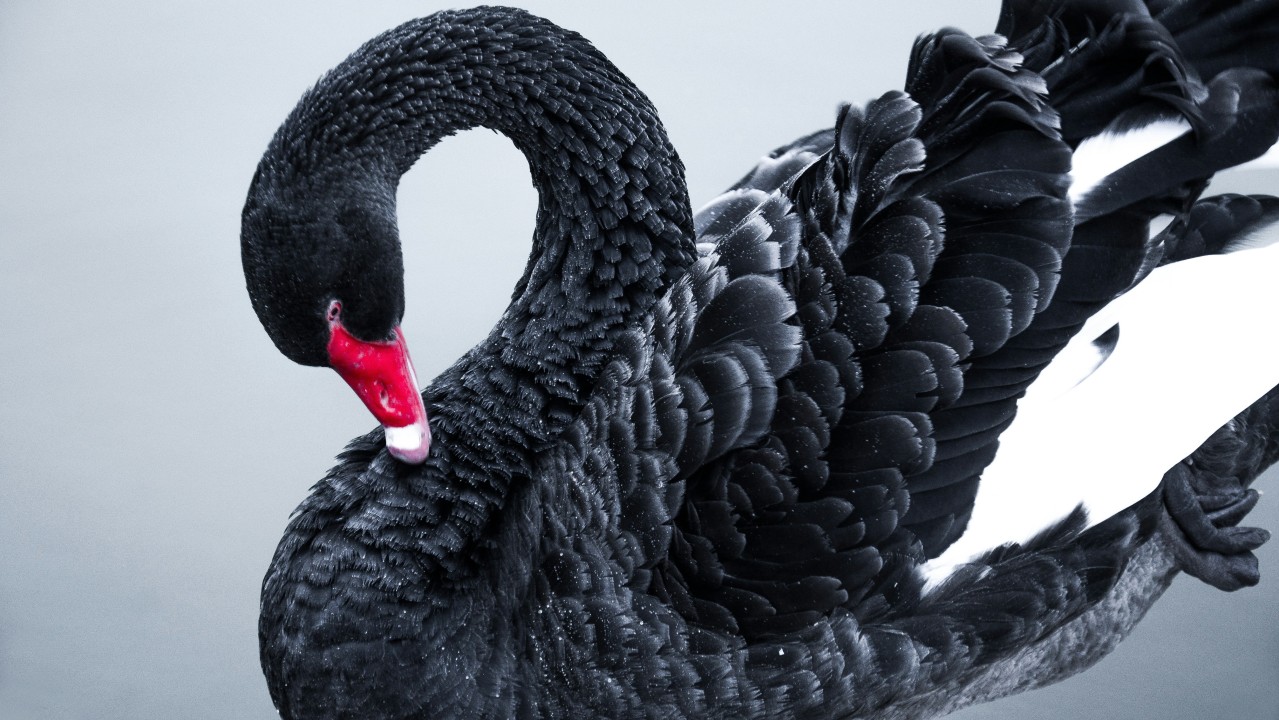
There is an old adage in risk management: if you find yourself surprised by a black-swan event, the problem was not that you failed to predict it. The problem was that you had constructed a portfolio that could not survive it. In a world where global military expenditure has reached $2.7 trillion, its fastest rate of increase since the end of the Cold War, where China is deploying export controls on rare earths as a geopolitical weapon, and where a single presidential decision can reprice global supply chains overnight, the distinction has never felt more urgent.
The conventional answer to such turbulence is diversification: spread your bets, balance your exposures, and pray that the correlations hold. But correlations have a habit of collapsing precisely when you need them most, as 2022's simultaneous bond-and-equity rout so memorably demonstrated. A more radical, and more intellectually honest, answer lies in a philosophy first articulated by a first-century Stoic philosopher and later formalised by an options trader who made his name by profiting from catastrophe.
That philosophy is the barbell strategy. And 2026, in all its chaotic, multipolar, algorithmically amplified glory, is the environment it was built for.
Seneca's Insight, Taleb's Blueprint
Seneca, writing under Nero's erratic reign, observed that wealth creates fragility. The more you have to lose, the more exposed you become to fortune's whims. His counsel was disarmingly practical: mentally rehearse the worst, hold your possessions lightly, cultivate an inner state from which any change can only be an improvement. It was, in essence, an asymmetric philosophy of life.
Nassim Nicholas Taleb, writing two millennia later in Antifragile, recognised in Seneca a kindred spirit and translated his wisdom into a concrete investment architecture: place the vast majority of your capital in instruments so safe as to be almost inert, short-dated government bonds, cash, inflation-linked gilts, allocated gold, and deploy a small residual in positions of extreme speculative potential. Options, venture stakes, asymmetric macro bets. What you scrupulously avoid is the comfortable middle: the balanced fund, the moderate-risk blend, the 60/40 portfolio that feels prudent until the day it decidedly is not.
"By first minimising downside exposure, one can freely let the upside, the positive Black Swans, take care of itself" — Nassim Nicholas Taleb, The Black Swan.
The arithmetic is elegant. If 90% of your capital sits in genuinely safe instruments, your maximum conceivable loss is 10%. Yet your upside is theoretically uncapped. You are not attempting to predict which black swan will land; you are ensuring that when one does, you can both survive and profit from it. As Taleb puts it with characteristic bluntness:
“To make money, first you must survive” — Nassim Nicholas Taleb, The Black Swan.
A Strategy Tested in The Fire
The barbell is no theoretical curiosity. After the global financial crisis, a Treasury-plus-high-yield version navigated 2008's panic and 2009's recovery with remarkable equanimity: the Treasury leg cushioned the fall, and the credit leg powered the rebound. Academic scrutiny has been equally flattering. A study examining a prototypical equity barbell (roughly 88% cent in Treasury notes, 12% in S&P call options) found that over an 18-year period spanning 2008 and the 2020 pandemic, it matched or exceeded a pure-equity portfolio at a fraction of the volatility. The key was avoiding catastrophic loss: by sidestepping the 50% drawdown of 2008, the barbell's cumulative return caught an all-equity strategy by 2016 and stayed ahead.
The barbell's principal cost, and one should be honest about this, is opportunity cost in raging bull markets. When everything rises, the cash-heavy core drags on returns. This is the price of insurance, and like all insurance, it looks wasteful right up until the moment it does not.
The 2026 Polycrisis: A World Made For Barbells
The word 'polycrisis', multiple shocks entangled and mutually amplifying, has migrated from academic papers into the vocabulary of central bankers and finance ministers. The constellation of risks as of early 2026 is formidable.
Geopolitical fracture: Finland's President Alexander Stubb captured the moment at Davos in January, likening it to "the 1918, 1945, and 1989 moment of our generation," a once-in-generations rupture of the international order. French Foreign Minister Jean-Noël Barrot warned that US-China great-power competition threatens to "force Europe to pick sides." In direct response, the EU and India concluded a landmark free-trade agreement on 27 January 2026, creating the world's largest free-trade zone encompassing 2 billion people and roughly 25% of global GDP, diversifying economic exposure away from any single partner. Meanwhile, Taiwan, which supplies a major portion of the world's leading-edge chips, sits at the apex of US-China strategic competition, constituting what analysts have called the nightmare scenario for global markets.
Trade war whiplash: US tariffs on Chinese imports peaked at 145% in April 2025; China's reciprocal tariffs reached 125%. A Geneva truce in May reduced the "reciprocal" component to 10% on each side, though the US total stands at approximately 30% on Chinese goods. A Trump-Xi summit in Busan in October extended the arrangement until November 2026, when rates could escalate again absent a comprehensive deal.
The picture has since shifted further still: in late February, the US Supreme Court struck down the administration's sweeping reciprocal tariffs, only for the White House to immediately replace them with a fresh 10% global levy and signal an intention to raise it to 15%. As former IMF chief economist Gita Gopinath has warned: "Don't be fooled. Everything has changed for the global economy. We've moved away from a rules-based, predictable trade order."
Energy and inflation: The oil market is currently oversupplied by an estimated one to two million barrels per day, keeping fuel costs subdued and headline inflation in retreat from its 2022 peaks. This is welcome, but should not invite complacency. A single serious incident in the Gulf, or a collapse of the Russia-Ukraine grain corridor, could reprice energy markets within days. Meanwhile, core inflation has proved sticky in many economies, and central banks face the genuinely uncomfortable possibility of both deflationary and inflationary tail scenarios simultaneously.
Safe havens and speculative fever, side by side: Gold breached $5,000 per troy ounce for the first time on 26 January 2026, hitting an intraday peak of $5,110 before surging further to a record $5,586 by 29 January. As of the date of this publication, gold trades near $5,040, still more than $2,000 above where it stood a year ago, reflecting years of central bank accumulation and a generalised loss of confidence in rules-based order. Simultaneously, the AI boom of 2025 sent equity indices into a frenzy reminiscent of the late-1990s dotcom era (the S&P 500 briefly crossed 7,000 in early 2026 before pulling back to around 6,860), a positive black swan that provided a crucial counterweight to tariff disruption and helped global growth hit 3.2% in 2025, exactly in line with pre-year forecasts. But Gopinath cautions the apparent stability was deceptive: it was achieved only through a combination of paused escalations, fiscal stimulus, and an AI investment boom, stabilisers that cannot be assumed indefinitely.
"The world itself has become a barbell. Extreme downside risks and transformative upsides coexist. The gentle, predictable growth trajectory feels like wishful thinking."
Antifragile, Not Merely Robust
Taleb distinguishes three states: fragile, robust, and antifragile.
A fragile portfolio is destroyed by shocks. A robust one survives them. An antifragile one is improved by them; it feeds on disorder. The barbell aspires to this third category, and the aspiration is not as fanciful as it sounds. When volatility spikes, long-volatility positions become dramatically more valuable. When safe-haven assets surge as risk assets plunge, the barbell investor's core appreciates in real terms even as the speculative side declines. Uncertainty, in other words, is not merely tolerable within this framework; it is actively useful. For the moderate portfolio, by contrast, volatility is pure cost: it widens spreads, compresses valuations, and erodes the smooth compounding that its construction implicitly assumes.
Food For Thought
The following are not conclusions. They are provocations: questions and observations worth sitting with before your next investment committee meeting, your next asset allocation review, or simply your next quiet moment with the financial news.
The middle is not safe because it feels safe: The 60/40 portfolio lost money in both its legs simultaneously in 2022. The supposedly balanced mortgage securities of 2007 were anything but. Moderate risk is often a euphemism for hidden risk, the kind that only reveals itself when you can least afford to discover it. Ask yourself: what is the true worst-case scenario for each position in your portfolio, and have you stress-tested it against a world that looks like today's, not 2015's?
Your risk model was built for a world that no longer exists: Most institutional risk frameworks were calibrated in the era of globalisation, low inflation, and US-anchored multilateralism. That era ended sometime between 2016 and 2022. If your Value-at-Risk model still assumes benign correlation between asset classes, or that geopolitical shocks are short-lived and mean-reverting, it may be measuring the wrong world with impressive precision.
Liquidity is a strategy, not a failure of ambition: In March 2009, in March 2020, and in October 2022, the investors who changed the long-term trajectory of their portfolios were not those with the most sophisticated models. They were the ones with cash. Dry powder is not laziness; in a world where dislocations are becoming more frequent and more severe, it is one of the highest-conviction positions you can hold. The question is not whether opportunity will come. The question is whether you will have the capital when it does.
Tail risks are no longer in the tail: A Supreme Court ruling striking down presidential tariff powers, followed within days by a fresh executive order imposing a new global levy, all within a single February week, is not a tail event. It is the baseline. When the improbable becomes routine, probability-weighted portfolio construction breaks down. The barbell's virtue is that it does not require you to assign probabilities to black swans; it simply ensures that when one lands, you are still standing.
Gold at $5,040 is not the story; the reason it is at $5,040 is: Central banks, particularly in China, Russia, India, and the Gulf states, have been accumulating gold at a record pace not because they expect inflation, but because they no longer fully trust the architecture of dollar-denominated global finance. When the institutions responsible for maintaining the system begin hedging against it, that is a signal worth heeding. The question for every investor is not whether gold belongs in a portfolio, but what its continued ascent is telling you about the world in which that portfolio must survive.
The best investments of the next decade may not yet exist: Quantum computing, next-generation nuclear fusion, AI agents capable of autonomous scientific research: any one of these, if it crosses the threshold from laboratory to commercial reality, represents a positive black swan of civilisational scale. The barbell's speculative allocation is not a gamble on which one will succeed. It is a considered acknowledgement that transformative upside exists, that you cannot know its precise shape in advance, and that a small, diversified exposure to that possibility is worth carrying. In Taleb's language: position yourself in the path of positive serendipity.
Seneca had no portfolio. But he understood ruin. He wrote:
"Omnia aliena sunt, tempus tantum nostrum est."
"Everything is foreign to us; only time is truly ours."
For an investor, the equivalent truth is this: returns can be recovered, markets eventually clear, economies ultimately grow. But the years spent rebuilding from a preventable ruin cannot be reclaimed.
Protect the time. The upside will find you.
At Nevv, we curate legacies. Our strategy is to provide sophisticated investors the tools, insights, and access to participate intelligently in the alternative assets universe.*
DM or WhatsApp us to learn more.*
*For professional and accredited investors only!
Disclaimer: This edition of Constellation is shared for general information and educational purposes only. It does not constitute investment advice or a personal recommendation, nor should it be treated as an offer to sell, a solicitation to buy, or an invitation to engage in any transaction involving securities, funds, alternative assets, or any other financial instruments.
Past performance is not a reliable indicator of future results. The value of investments can fall as well as rise, and readers may not recover the amount originally invested. Before taking action, readers should seek independent financial, legal, tax, or other professional advice appropriate to their individual circumstances.
This publication does not include paid promotions, partnerships, or sponsored endorsements of any kind.