Constellation · Nevv Capital
The Secret Life of Gold: How Belief Becomes Trust
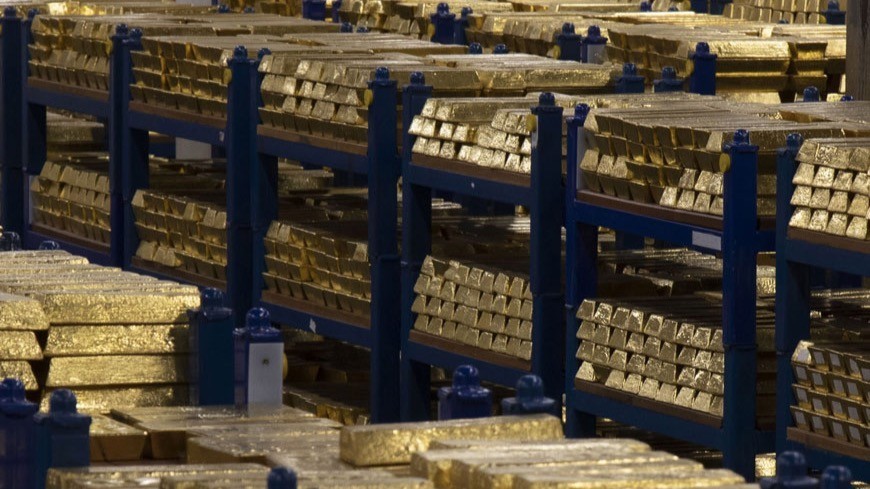
“Gold is money. Everything else is credit.” — J.P. Morgan
Long before spreadsheets, stock tickers, or balance sheets, there was gold, quietly gleaming, quietly commanding attention. From the first flakes found in riverbeds, gold captured something deeper than utility, permanence in a world that never stood still.
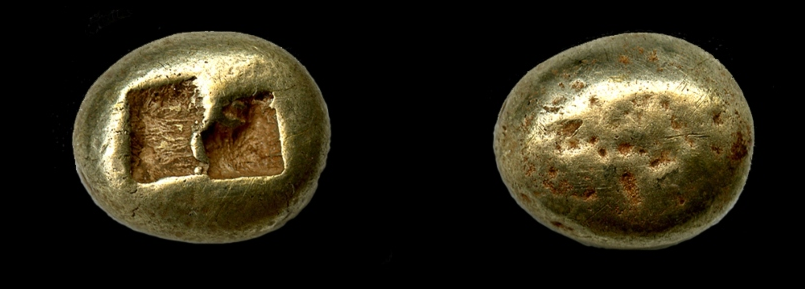
When the Lydians struck the first standardised gold coins in the 7th century BCE, they weren’t minting money, they were minting trust. Every empire since has understood that whoever controls gold controls confidence.
And when Richard Nixon severed the dollar’s tie to gold in 1971, the metal didn’t lose its meaning, it revealed it.
Gold is where belief becomes trust.
Gold reached our planet by meteorites rich in the element. As Earth coalesced from cosmic debris, the dense metal largely plunged toward the planet's interior, settling deep within the scorching core, far beyond human grasp. Yet traces lingered in the outer layers, the crust, where humanity has extracted it for thousands of years. Its scarcity, finite supply, and the sheer challenge of mining it all contribute to gold's enduring worth in our world.
The term "gold" traces back to the Old English "geolu," evoking its sunny hue, and for more than two millennia, societies worldwide have cherished it for that very luster and allure. Across cultures, it held profound esteem. To the ancient Maya, for instance, it served as ornate adornment and a potent emblem of solar divinity.
That same elusiveness, however, wove gold into the fabric of exchange early on. The inaugural minted coins emerged from the ancient realm of Lydia, crafted from electrum, a native fusion of gold and silver. This innovation laid the groundwork for precious metals as a foundation of trade and tender.
From Empires to Algorithms: A Timeline of Anchored Faith
Gold’s story is really the story of how civilisation defines security.
The Lydians are widely regarded as creating history’s first coins. The Lydian Empire inhabited the ancient region of Lydia, the western part of present day Turkiye. Believed to have emerged around 1200 BC, the Lydian civilisation began to truly flourish in the 7th century BC, becoming the beating heart of Anatolia’s wealth and trade.
At the crossroads of great empires, Lydia thrived on commerce, craftsmanship, and the riches of the Pactolus River, whose sands were said to shimmer with gold. Under kings like Gyges and Croesus, it grew into a sophisticated economy, a place where merchants, miners, and monarchs converged, and where the world’s first coins were struck, turning metal into money and belief into trust.The Lydian innovation transformed gold from ornament to system, a technology of trust that could move across borders and generations.
Through cycles of boom and panic, dot-com, housing, crypto, climate stress, gold has endured as a quiet observer. Whenever trust fractures, capital condenses to its shine. Finite, apolitical, narrative-driven: it anchors when trust frays, proving both ancient relic and modern hedge.
The 2025 Surge: Seismic, Not Subtle
This year’s rally isn’t gentle, it’s a reckoning. Gold peaked above $4,380/oz in October 2025, a 67 % surge from January’s $2,624 open. As of 31 October, it closed at $4,012/oz (+53 % YTD) after brief profit taking near $4,000 amid Fed caution and election volatility — yet November futures hint at renewed momentum.
Key catalysts:
Forecasts reinforce the conviction:
This isn’t noise, it’s belief migrating from abstractions to tangibles.
Central Banks Hoard Gold and Why It Matters
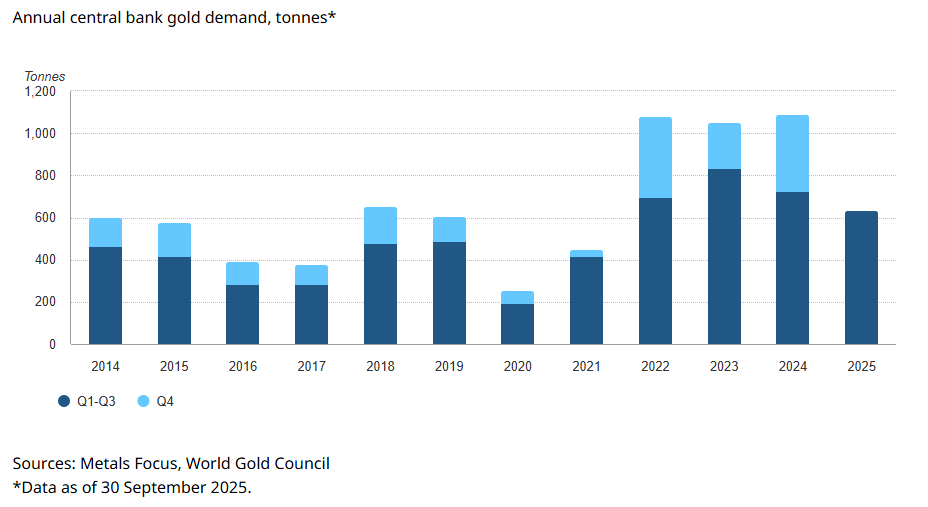
Central banks remain the silent bid behind gold’s strength. In Q3 2025, official sector purchases rose 28 % from Q2, reaching 220 tonnes. That brings year-to-date demand to 634 t, below 2022–2023 records but far above pre-2020 norms.
Even with prices near record highs, sovereign buyers continue to add gold strategically, treating it as structural, not opportunistic, insurance.
The broader picture remains formidable:
This sustained demand underscores gold’s role as a structural anchor in global reserves, reinforcing its status as a trusted store of value amidst shifting financial landscapes.
✦ Food for Thought
Gold reminds us that the most enduring value often lives at the intersection of scarcity, narrative, and trust. It has watched empires form, markets burn, currencies collapse, and faith reinvent itself in a thousand shapes.
Across time, people have sought new kinds of certainty, salt, silk, oil, algorithms. Yet all eventually return to the same glint in the dark. Value is not created by mere novelty, but proven through endurance.
Belief fades, but trust, once proven, holds.
Everything else is credit.
At Nevv, we curate legacies. Our strategy sits at the intersection of these exclusive worlds, giving sophisticated investors the tools, insights, and access to participate intelligently in the alternative assets universe.*
DM or WhatsApp us to learn more.*
*For professional and accredited investors only!
Disclaimer: This analysis is provided for informational purposes only and should not be considered as personalised investment advice. Past performance does not guarantee future results. Investors should consult qualified professionals before making any investment decisions.